Tag Archives: independence

Adapting Motor Vehicles for People with disAbilities

newenglandwheelchairvan.com boston strong

Introduction

A Proven Process for Gaining Freedom on the Road

The introduction of new technology continues to broaden opportunities for people with disabilities to drive vehicles with adaptive devices. Taking advantage of these opportunities, however, can be time consuming and, sometimes, frustrating.

The information in this brochure is based on the experience of driver rehabilitation specialists and other professionals who work with individuals who require adaptive devices for their motor vehicles. It is centered around a proven process —evaluating your needs, selecting the right vehicle, choosing a qualified dealer to modify your vehicle, being trained, maintaining your vehicle — that can help you avoid costly mistakes when purchasing and modifying a vehicle with adaptive equipment.

Also included is general information on cost savings, licensing requirements, and organizations to contact for help. Although the brochure focuses on drivers of modified vehicles, each section contains important information for people who drive passengers with disabilities.


Investigate Cost Saving Opportunities &Licensing Requirements

Cost Saving Opportunities

The costs associated with modifying a vehicle vary greatly. A new vehicle modified with adaptive equipment can cost from $20,000 to $80,000. Therefore, whether you are modifying a vehicle you own or purchasing a new vehicle with adaptive equipment, it pays to investigate public and private opportunities for financial assistance.

There are programs that help pay part or all of the cost of vehicle modification, depending on the cause and nature of the disability. For information, contact your state’s Department of Vocational Rehabilitation or another agency that provides vocational services, and, if appropriate, the Department of Veterans Affairs. You can find phone numbers for these state and federal agencies in a local phone book. Also, consider the following.

  • Many nonprofit associations that advocate for individuals with disabilities have grant programs that help pay for adaptive devices.
  • If you have private health insurance or workers’ compensation, you may be covered for adaptive devices and vehicle modification. Check with your insurance carrier.
  • Many manufacturers have rebate or reimbursement plans for modified vehicles. When you are ready to make a purchase, find out if there is such a dealer in your area.
  • Some states waive the sales tax for adaptive devices if you have a doctor’s prescription for their use.
  • You may be eligible for savings when submitting your federal income tax return. Check with a qualified tax consultant to find out if the cost of your adaptive devices will help you qualify for a medical deduction.

Licensing Requirements

All states require a valid learner’s permit or driver’s license to receive an on–the–road evaluation. You cannot be denied the opportunity to apply for a permit or license because you have a disability. However, you may receive a restricted license, based on your use of adaptive devices.


Evaluate Your Needs

Driver rehabilitation specialists perform comprehensive evaluations to identify the adaptive equipment most suited to your needs. A complete evaluation includes vision screening and, in general, assesses:

  • Muscle strength, flexibility, and range of motion
  • Coordination and reaction time
  • Judgment and decision making abilities
  • Ability to drive with adaptive equipment

Upon completion of an evaluation, you should receive a report containing specific recommendations on driving requirements or restrictions, and a complete list of recommended vehicle modifications.

Finding a Qualified Evaluator

To find a qualified evaluator in your area, contact a local rehabilitation center or call the Association for Driver Rehabilitation Specialists (ADED). The phone number is in the resource section. The Association maintains a data base of certified driver rehabilitation specialists throughout the country. Your insurance company may pay for the evaluation. Find out if you need a physician’s prescription or other documen-tation to receive benefits.

Being Prepared for an Evaluation

Consult with your physician to make sure you are physically and psychologically prepared to drive. Being evaluated too soon after an injury or other trauma may indicate the need for adaptive equipment you will not need in the future. When going for an evaluation, bring any equipment you normally use, e.g., a walker or neck brace. Tell the evaluator if you are planning to modify your wheelchair or obtain a new one.

Evaluating Passengers with Disabilities

Evaluators also consult on compatibility and transportation safety issues for passengers with disabilities. They assess the type of seating needed and the person’s ability to exit and enter the vehicle. They provide advice on the purchase of modified vehicles and recommend appropriate wheelchair lifts or other equipment for a vehicle you own. If you have a child who requires a special type of safety seat, evaluators make sure the seat fits your child properly. They also make sure you can properly install the seat in your vehicle.


Select the Right Vehicle

Selecting a vehicle for modification requires collaboration among you, your evaluator, and a qualified vehicle modification dealer. Although the purchase or lease of a vehicle is your responsibility, making sure the vehicle can be properly modified is the responsibility of the vehicle modification dealer. Therefore, take the time to consult with a qualified dealer and your evaluator before making your final purchase. It will save you time and money. Be aware that you will need insurance while your vehicle is being modified, even though it is off the road.

The following questions can help with vehicle selection. They can also help determine if you can modify a vehicle you own.

  • Does the necessary adaptive equipment require a van, or will another passenger vehicle suffice?
  • Can the vehicle accommodate the equipment that needs to be installed?
  • Will there be enough space to accommodate your family or other passengers once the vehicle is modified?
  • Is there adequate parking space at home and at work for the vehicle and for loading/unloading a wheelchair?
  • Is there adequate parking space to maneuver if you use a walker?
  • What additional options are necessary for the safe operation of the vehicle?

If a third party is paying for the vehicle, adaptive devices, or modification costs, find out if there are any limitations or restrictions on what is covered. Always get a written statement on what a funding agency will pay before making your purchase.


Choose a Qualified Dealer to Modify Your Vehicle

Even a half inch change in the lowering of a van floor can affect a driver’s ability to use equipment or to have an unobstructed view of the road; so, take time to find a qualified dealer to modify your vehicle. Begin with a phone inquiry to find out about credentials, experience, and references. Ask questions about how they operate. Do they work with evaluators? Will they look at your vehicle before you purchase it? Do they require a prescription from a physician or other driver evaluation specialist? How long will it take before they can start work on your vehicle? Do they provide training on how to use the adaptive equipment?

If you are satisfied with the answers you receive, check references; then arrange to visit the dealer’s facility. Additional information to consider is listed below.

  • Are they members of the National Mobility Equipment Dealers Association (NMEDA) or another organization that has vehicle conversion standards?
  • What type of training has the staff received?
  • What type of warranty do they provide on their work?
  • Do they provide ongoing service and maintenance?
  • Do they stock replacement parts?

Once you are comfortable with the dealer’s qualifications, you will want to ask specific questions, such as:

  • How much will the modification cost?
  • Will they accept third party payment?
  • How long will it take to modify the vehicle?
  • Can the equipment be transferred to a new vehicle in the future?
  • Will they need to modify existing safety features to install the adaptive equipment?

While your vehicle is being modified, you will, most likely, need to be available for fittings. This avoids additional waiting time for adjustments once the equipment is fully installed. Without proper fittings you may have problems with the safe operation of the vehicle and have to go back for adjustments.

Some State Agencies specify the dealer you must use if you want reimbursement.


Obtain Training on the Use of New Equipment

Both new and experienced drivers need training on how to safely use new adaptive equipment. Your equipment dealer and evaluator should provide information and off-road instruction. You will also need to practice driving under the instruction of a qualified driving instructor until you both feel comfortable with your skills. Bring a family member or other significant person who drives to all your training sessions. It’s important to have someone else who can drive your vehicle in case of an emergency.

Some state vocational rehabilitation departments pay for driver training under specified circumstances. At a minimum, their staff can help you locate a qualified instructor. If your evaluator does not provide on-the-road instruction, ask him or her for a recommendation. You can also inquire at your local motor vehicle administration office.


Maintain Your Vehicle

Regular maintenance is important for keeping your vehicle and adaptive equipment safe and reliable. It may also be mandatory for compliance with the terms of your warranty. Some warranties specify a time period during which adaptive equipment must be inspected. These “check ups” for equipment may differ from those for your vehicle. Make sure you or your modifier submits all warranty cards for all equipment to ensure coverage and so manufacturers can contact you in case of a recall.

For additional copies of this brochure and other important vehicle safety information, you can contact DOT’s web site at www.nhtsa.dot.gov and the DOT Auto Safety Hotline: 888-DASH-2-DOT (888-327-4236).


Resources

The Association for Driver Rehabilitation Specialists (ADED)
2425 N. Center Street # 369, Hickory, NC 28601
(866) 672-9466
www.driver-ed.org
www.aded.net

National Mobility Equipment Dealers Association (NMEDA)
11211 N. Nebraska Ave., Suite A5, Tampa, FL 33612
(800) 833-0427 
www.nmeda.org

AAA
1000 AAA Drive, Heathrow, FL 32746-5063
(404) 444-7961
www.aaa.com

Department of Veteran Affairs
(800) 827-1000
www.va.gov

State Departments of Vocational Rehabilitation
Listed in telephone book.


The following manufacturers offer rebates or reimbursements on new vehicle modification.

Daimler Chrysler Corporation
(800) 255-9877
(TDD Users: (800) 922-3826)
www.automobility.daimlerchrysler.com

Ford Motor Company
(800) 952-2248
(TDD Users: (800) TDD-0312)
www.ford.com/mobilitymotoring

General Motors Corporation
(800) 323-9935
(TDD Users: (800) TDD-9935)
www.gmmobility.com

Saturn
(800) 553-6000, Prompt 3
(TDD Users: (800) 833-6000)
www.saturn.com

Volkswagen
(800) 822-8987
www.vw.com

Audi
(800) 822-2834
www.audiusa.com
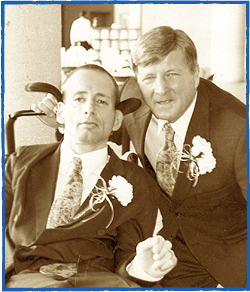
ESPN, Ben Affleck To Honor father-son team Hoyt, Yes You Can

Team Hoyt

Actor Ben Affleck is set to present an award for perseverance to a father-son team who have competed together in more than 1,000 races despite the younger man’s severe disabilities.

Rick Hoyt, 51, has cerebral palsy and is unable to use his hands or legs. But with the help of a custom-made wheelchair steered by his father — Dick Hoyt, 73 — he’s blazed through finish lines at triathlons, marathons and other endurance events for over 30 years.

Now the duo, known as Team Hoyt, will be honored at the ESPYS, an awards show presented by ESPN highlighting the best in sports for the year. Affleck  a Boston, MA native  will present the Hoyts with the Jimmy V Perseverance Award at the event July 17, ESPN said.

The Hoyts had indicated that this year’s Boston Marathon would be their last. But after bombs exploded at the event when the men were just one mile shy of the finish line, they vowed to compete again next year. ESPN indicated that the Hoyts’ commitment to race again is testament to the pair’s “determination in the face of adversity.”

“Rick and I are grateful to be receiving this award,” said Dick Hoyt. “Our motto is ‘Yes You Can’ and we strive to always persevere even when others tell you that it cannot be done.”

Discover the National Veterans Wheelchair Games


discover- the national veterans wheelchair games wheelchair vans newenglandwheelchairvan.com

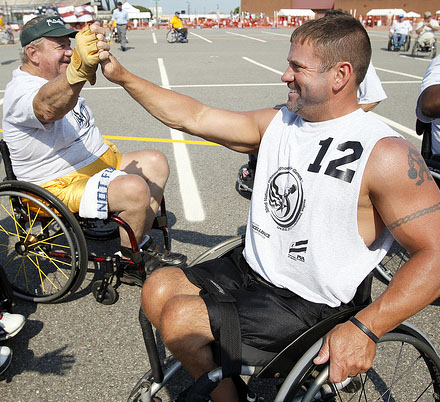
The National Veterans Wheelchair Games, copresented annually by Paralyzed Veterans of America and the Department of Veterans Affairs(VA), allows veterans with disabilities to rediscover their strength and potential through athletic competition with peers. The Games are the largest annual wheelchair-sporting event in the world, with hundreds of participants and thousands of volunteers attending, making planning and preparation a year-long process.

The 33rd Wheelchair Games will be held July 13–18, 2013, in Tampa, FL. The Tampa Convention Center met all of the criteria for hosting the Games, which included availability of a very large, open space suitable for the Sports, Recreation and Fitness Expo and availability of appropriate venues around the city for the various competitions, including softball, basketball, track and field and trapshooting. Events will take place at the riverwalk, in parks, the host hotel, the zoo, a local high school and at the Convention Center, where competitions, ceremonies and the Expo will be held.

At the Expo corporate and nonprofit organizations showcase their brand and engage with hundreds of wheelchair athletes, coaches, family members, health-care providers and rehabilitation professionals.  Veterans can learn about a variety of health-care products and services and organizations that offer assistance or opportunities.

Local Host Coordinator (LOC) and VA Recreation Therapist Jeanene LeSure said the LOC just “recently secured all of our venues for the various sporting events and ceremonies. Our entire LOC is complete; we have a lot of dedicated VA employees as well as chapter members from the Paralyzed Veterans Florida Gulf Coast serving on several committees.”

LeSure is responsible for managing the LOC and its nonstop work to have everything ready for the Games in 2013. “We’re almost at the halfway point; we’ve been working for about a year now,” she said.

Without the generous and selfless support of sponsors, many of which have been supporting the Games for upward of 20, 25 and 30 years, the Games could not be the annual success that it is.  Sponsor and exhibitor recruitment is also a year-round process, conducted by Paralyzed Veterans corporate marketing team as well as the LOC.

“Simply put, our sponsors are the lifeblood to ensuring each year that we have the appropriate means to make the NVWG a great success,” said Pablo Sosa, associate director, Corporate & Cause Marketing. “Through our sponsors’ generous support, Paralyzed Veterans is helping improve the lives and well-being of these most deserving men and women.”

Back in Tampa, logistics take priority. Recently the LOC completed its warehouse inventory. “We went through about 17 53-foot UPS trucks full of equipment [for the sporting events]. We counted everything and took note of what we needed in order to ensure we have everything we need for the Games,” LeSure added.

Even with several accomplishments under its belt, the LOC still has a lot of work to do in order to make the Games a success. Currently, the LOC is working out the “finer details” of the Games, including finalizing the event schedule, ensuring that it has the necessary equipment for the various sporting events and ensuring that the venues are capable of holding the planned sports.

“In that area, the Tampa area has an advantage because many of the events that we are hosting at the Games are already hosted locally here in Tampa. So many of our venues are already familiar with the rules and regulations of these sports, making the whole process a lot easier for everyone,” LeSure said.

Tom Brown, Paralyzed Veterans’ consultant and program manager for the Games, noted, “The LOC in Tampa has been extremely cooperative and energetic. They are eager to ensure that the 33rd NVWG is the best ever.  We all share the same goal, that of making sure the veterans have an excellent, life-changing experience.”

In the months ahead, LeSure and the LOC will be busy trying to register the 2,500-3,000 volunteers necessary to work the Wheelchair Games. For those interested, there will be an online signup that will open in January 2013. This registration period will last until June.

Thirty-two years ago, the Wheelchair Games started out as a rehabilitation event, an extension of therapy in the community to help our nation’s wounded heroes know that disabled does not mean unable.

“The Games have never lost that focus and have been introducing veterans to opportunities in sports and recreation that they never dreamed possible. For many of our veterans, the Games are truly life changing,” Brown said. “We make it our priority to ensure that each veteran has a truly memorable and rewarding experience.”

Learn more about the National Veterans Wheelchair Games


spinal cord injury rehabilitation program new england

spinal cord injury rehabilitation program new england http://newenglandwheelchairvan.com/

Spinal Cord Injury Rehabilitation Program

Early rehabilitation treatment is critical to help patients achieve their fullest potential following a spinal cord injury. At New England Rehabilitation Hospital patients learn how to adapt and return to a normal life. Patients learn how to avoid complications and increase independence. New England Rehabilitation Hospital is pleased to offer a primary care practice for individuals with spinal cord injuries. This program provides individuals with spinal cord injury a community based physician that has the expertise and commitment to care for their special needs on an ongoing and proactive basis.

The Spinal Cord Injury Team of experienced clinicians at New England Rehabilitation Hospital may include some or all of the following professionals dependent on the patient’s individual needs:

The Spinal Cord Injury Rehabilitation Team Consists of:

New England Rehabilitation Hospital’s Spinal Cord Rehabilitation Program is designed to help individuals maximize their functional abilities so they can successfully return to the community. This goal is accomplished through development of an individualized treatment plan for each patient by the interdisciplinary staff. New England Rehabilitation Hospital advocates for involvement of the family in all aspects of care, and ensures patient/family education, support and participation in life care planning. New England Rehabilitation Hospital is fortunate to have the Greater Boston Chapter of the National Spinal Cord Injury Association at the hospital. The chapter is an invaluable asset in the rehabilitation and support of individuals with spinal cord injury.

  • Physiatrist (a physician who specializes in physical medicine and rehabilitation) Board Certified in Spinal Cord Injury Medicine
  • Psychiatrist
  • Nurses specializing in 24-Hour Rehabilitation Nursing
  • Occupational Therapist
  • Physical Therapist
  • Speech Language Pathologist
  • Case Manager
  • Benefits specialist
  • Dietician
  • Other medical specialties to include;
    • Neurologist
    • Neuropsychologist
    • ENT
    • Oncologist
    • Pulmonologist
    • Infectious Disease Specialist
    • Wound Specialist

Program Components

The Spinal Cord Rehabilitation Program components include:

  • 24-Hour Rehabilitation nursing to address wound management, pain management, reinforce acquired functional skills, to assist with education of the patient and family.
  • Intensive and Individualized, goal-oriented treatment plans
  • Functional Approach to Activities of Daily Living and Community Re-entry
  • Availability of State-of-the-Art rehabilitation technology to include:
    • AutoAmbulator (partial weight support treadmill training)
    • Bioness H200 (Functional Electrical Stimulation)
    • Bioness L300 (Functional Electrical Stimulation)
    • Adaptive equipment for phone, computer and other aspects of communication.
  • Specialized insurance benefits coordination and management
  • Family conferences, education and support
  • Comprehensive case management discharge planning
  • Nutritional management
  • Daily Living Skills Training
  • Community Re-Entry Program
  • Splinting and Orthotics
  • Sexual Counseling
  • Educational Series
  • Driving Evaluation Program, as well as referrals to vendors for access and training to adaptive driving equipment.
  • Therapeutic Pool (Woburn only, 96 degrees)
  • Comprehensive Outpatient Services/Clinics including access to a physiatrist who specialize in the care of individuals with spinal cord injury.

Benefits Management and Coordination

An illness or injury may affect a person’s capacity for returning to work. If one of our patients is likely to be unable to return to work for a short or extended period, New England Rehabilitation Hospital offers the services of a Benefits Specialist to help the patient and family with practical matters of income replacement and health insurance concerns. The Benefits Specialist addresses such matters as: filing for Family and Medical Leave, Short Term Disability, Long Term Disability, Social Security Disability, MassHealth and COBRA assistance. The Benefits Specialist is also able to address social concerns of emergency aid for those persons who may not have worked prior to the injury or illness.

New England Rehabilitation Hospital recognizes the importance of assisting patients back to their homes, communities and places of work. The benefits service is dedicated to achieving those goals by helping patients and families navigate through disability benefits systems and by providing support to patients and families as they go through this often difficult and confusing process. Many patients have commented that they would not have known “where to begin” and that this service completes their overall rehabilitation.

New England Rehab Offers Elder Assist Clinic

New England Rehabilitation Hospital in conjunction with the Senior Resource Center (SRC) now offers complimentary, weekly Elder Assist Clinics in Woburn. These pre-registered private appointments with SRC’s Eldercare Nurse Attorneys help patients and their families with important issues, to include:

  • How to pay for current and long term health care needs
  • How to protect your home and your hard assets
  • Advice on estate planning

These clinics serve as a bridge in helping New England Rehabilitation Hospital patients and their families deal with transition needs for a safe and timely discharge home, to a skilled nursing facility, or an assisted living facility.

Senior Resource Center, Inc. is a full-service eldercare planning advisory group, supporting seniors and their families throughout Massachusetts, and southern New Hampshire.

This Fourth Of July, Show Veterans Your Gratitude

Show Veterans Your Gratitude mobility center bridgewater, ma newenglandwheelchairvan.com

Although we should show our gratitude every chance we get, the Fourth of July is an especially profound time to thank the nation’s military community for their sacrifices and for our freedom.

And our current and ongoing support is crucial, given statistics such as the fact that the the vet unemployment rate is hovering at 6.6 percent .

Show your patriotism this Fourth of July by checking out the organizations below and supporting vets in need:

Unemployed Vets
Hire Heroes USA
Hire Heroes USA helps train and advise veterans in order to help them find jobs. The organization reports that it finds nine veterans a job each week. This July 4th – with the help of MedAssets, a health care management company – golfer Carl Meyers will host and play in the the 6th annual “100 Holes For Our Heroes” golf tournament to raise funds and awareness for Hire Heroes USA. To learn more about how you can help out, click here.

Military Families 
National Military Families Association
NMFA is a nonprofit committed to providing military service members and their families with much-needed financial and educational support. This Independence Day, the organization is encouraging Americans to send eCards to military families commemorating them on their service and sacrifice. On the Fourth of July, TravelCenters of America will also be hosting a donation drive to benefit the National Military Family Association’s Operation Purple Program. To learn more about how you can help out, click here.

Homeless Vets:
The National Coalition for Homeless Veterans
NCHV is a nonprofit that helps fund and offer administrative support for various local, state, and federal agencies in order to provide veterans with housing, food, health services, and employment opportunities. To learn more about how you can help out, click here.

Vets Struggling With Mental Health Issues
Veterans Crisis Line
With about 22 veteran suicides occurring each day, it is important that veterans receive adequate mental health and support services. The Veterans Crisis Line provides veterans with private 24-hour hotlines, online chatrooms, and text services to connect them to VA professionals who will consult them and sometimes perform suicide rescues. To learn more about how you can help out, click here.

Military Spouses
Hearts of Valor (formerly known as Wounded Warrior Wives)
This organization sponsors retreats for the spouses of wounded veterans to both relax and also discuss the challenges that they experience caring for their significant other.To learn more about how you can help out, click here.

Young Vets
Iraq And Afghanistan Veterans Of America
IAVA empowers and improves the lives of veterans who served in Iraq and Afghanistan with programs that support their health care, employment, and educational needs. To learn more about how you can help out, click here.

Vets With Disabilities
Disabled American Veterans
DAV employs hundreds of service officers nationwide to help struggling veterans receive the care and benefits they deserve from various government agencies – most notably the U.S. Department of Veterans Affairs. To learn more about how you can help out, click here.