Tag Archives: disabilities

Home accessibility

Whether it’s an unexpected injury or a birth condition, a temporary disAbility or something you’ve been dealing with your entire life, a physical limitation can make all the difference in how a person completes his/her everyday tasks. Something as simple as entering and exiting your home can become challenging if your home has not been properly assessed and made accessible for those with disAbilities. In order to make sure your home is as welcoming and as accessible as possible, we encourage you follow these tips for transforming your habitat.

Entry Ramps and Lifts
From one step to one flight, stairs are a difficult hurdle and hazardous to a person living with a disAbility. Entry ramps or wheelchair lifts can be permanent or portable solutions for homes in need of becoming wheelchair accessible, providing ease of access into the house. Entry ramps prove to be especially beneficial when carrying heavy luggage, groceries or moving furniture. Aside from allowing a wheelchair user to easily enter and exit the building, ramps offer convenience to guests wheeling strollers or using walkers.

Handrails and Support Bars
Installing handrails and support bars along staircases, bathtubs, toilets and other areas where a person with a disAbility may struggle without them is an easy way to make your home more accessible. Make sure handrails following staircases extend beyond the first and last steps, providing maximum support. You can also purchase floor-to-ceiling poles and install them at various locations throughout the home. Placing these poles adjacent to couches ease in day-to-day movement through the space. They are designed to aid those with disAbilities in standing, sitting or transferring to/from a wheelchair.

Mind Your Floors
Cluttered hallways, loose rugs and high thresholds can be a danger to someone trying to maneuver through the building in a wheelchair. Try to keep your traffic areas free from unnecessary decorations such as side tables and rugs that cannot be secured to the floor. Plush carpets may also prove to be a hindrance for someone with a disAbility, so use hardwood or tiled floors wherever possible. Additionally, you can purchase flat thresholds at hardware stores, which make transferring from carpeted to non-carpeted areas less of a hazard.

Culinary Arts Adapted

Ready to take the heat again? Think it’s time to get back in the kitchen? Whether you miss tending to a fiery passion for food or you’re tired of day-old delivery, dreams of putting a pan back in your hand can quickly become a reality again.

People with disAbilities might initially shy away from seemingly difficult hobbies or chores. But the chances are high that they are also unaware of the exciting alternatives available in the adaptive community. Your cooking days are not over simply because you are seated in the kitchen. In fact, adaptive cooking classes often require that instructors (those not living with a disAbility) perform culinary tasks just as their respective students would.

More important than pursuing or renewing a passion for cooking is the nutritional and financial value in preparing your own meals. Now more than ever, we are reminded on a daily basis of the financial climate we live in. Preparing your own meals at home helps you save money and empower you to eat more nutritious foods, cooked to your liking. So, make yourself at home in the kitchen with ease with a little help from gadgets and gizmos like the one-handed bottle opener, one-handed can opener, and self-stirring cookware. Cut your favorite fruits and veggies with a specially crafted cutting board and you’re well on your way to whipping up your favorite meal, on your own.

If you’re not a hot shot in the kitchen, but you want to be, ask local community centers if they offer adaptive cooking classes. Who knows, this could be your chance to start something new and exciting for your friends to enjoy. All it takes is willing participants, and who doesn’t like food?

Sled Hockey: A Sport For All Abilities

Sled Hockey - A Sport For All Abilities

The popularity of sled hockey is on the rise.
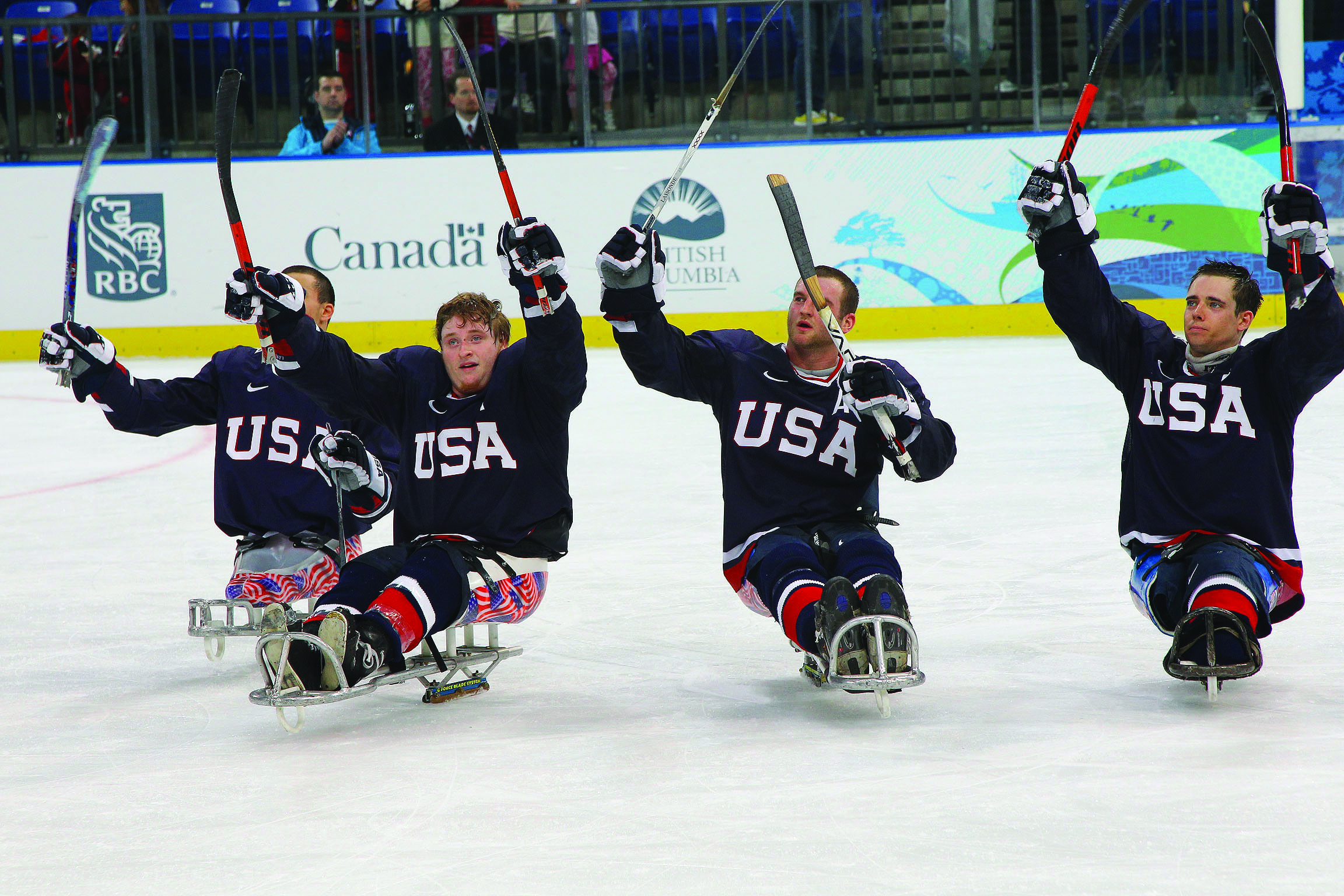
Many DSUSA chapters offer sled hockey opportunities, as do other independent clubs across the country.  The sport received a huge boost when USA Hockey took over as the national governing body for sled hockey and sled hockey programs. For the past 10 years, USA Hockey-sponsored sled hockey programs have sprung up across the U. S., with the national team selected by the organization. Also fueling interest in the sport is the National Hockey League (NHL), which hosted the first USA Hockey Sled Classic in Littleton, Colo., and Denver this past October. Four teams made up of 46 players, many on current and recent U.S. national team rosters, played under their NHL affiliate’s jersey – Colorado Avalanche, Chicago Blackhawks, Philadelphia Flyers, and Pittsburgh Penguins. Organizers hope to ultimately have all 32 NHL teams represented in future Sled Classics. And let’s not forget the U.S. Sled Hockey team which won gold in the 2010 Paralympic Winter Games in Vancouver. Amputee goalie Steve Cash, who didn’t allow a single goal in five games, won an ESPN ESPY award for Best Male Athlete with a DisAbility.

Who Can Play
Sled hockey is played by a wide range of players with a variety of mobility limitations:  amputees, spinal cord injuries, spina bifida, along with anyone who has a permanent disAbility that limits participation in stand up hockey.  In addition, with the exception of the highest level of competition, non-disAbled players are encouraged to participate.

“To play sled hockey, the only requirement is that you have a disAbility that prohibits you from playing stand up. That makes it very broad,” said Tom Carr, CTRS/L, assistant director of outreach and athletics, at Northeast Passage.

Northeast Passage, DSUSA’s Chapter in New Hampshire, has a thriving sled hockey program that attracts as many as 200 participants throughout the winter season. “As a team sport, it’s one of the fastest growing,” Carr said.

Part of its appeal is that there is little difference between sled hockey and stand up hockey in how the game is played. “It’s fast-paced and a full contact sport. The main difference is it’s played on a sled,” he said.

Sled hockey is a great form of exercise and fitness. It increases strength and coordination and also conditions the upper body. The balance used to propel, play the puck, and turn and stop gives arms, back and abdominal muscles a workout.  Those who play regularly quickly notice an increase in overall strength and balance both on and off the ice.

Necessity is the Mother of Invention
Sled hockey had its beginning in the early 1960s when some enterprising athletes at a physical rehabilitation center in Sweden wanted to play the game. The men modified a metal frame sled with two regular-sized ice hockey skate blades that allowed the puck to pass underneath. Their hockey sticks were round poles with bike handles.

The growth of the sport was slow to develop but by 1969, Stockholm had a five-team league that included both disAbled and able-bodied players. Ice sled hockey was first demonstrated at the Paralympic Winter Games in Sweden in 1976, and then again at the 1988 Innsbruck Paralympics. It became an official event at the 1994 Lillehammer Paralympics.

The game and equipment
Unless there is a penalty, there are six players for each team – three forwards, two defensemen, and a goalie. Substitutes may be made when play is stopped, or on the fly.  Previously, periods were 15 minutes in length, but this year they have been increased to 20 minutes, the same as stand up hockey. Play is on a regulation sized ice rink with standard size nets and puck. Checking and high-speed slapshots are common features of the sport.

Carr noted that sled hockey players typically own their own sleds for the best customized fit.  “Once someone gets into the sport, they want and need their own equipment,” he said. Players can get a basic hockey sled and pair of sticks for (approximately) $1,000.

Sleds are usually made of light-gauge aluminum, consisting of a customized “bucket” to sit in. A backrest can be used depending on the ability of the athlete. A frame supports the bucket, legs and feet, and is mounted on two skate blades attached under the bucket.  Athletes with double amputations tend to have an advantage here, since they can use shorter sleds with no leg supports, resulting in a smaller turn radius.

Instead of one hockey stick, players use two for propulsion, passing and shooting.  The sticks may be up to 100 cm long but are usually between 75-95 cm and can be wood, aluminum, or composite materials. The sticks have metal picks on one end for players to propel themselves.

“It helps if you have decent upper body strength and hand grip, but even then there are modifications and adaptations that can be made,” Carr said.  “Even those with limited grip can have sticks secured to their hands allowing them to participate.”

Players are outfitted with a hockey helmet, gloves, and body protection. Goalies wear basically the same equipment but do make modifications to the glove; metal picks are attached to the backside allowing the goalie to maneuver.

Sled hockey has a relatively small number of equipment suppliers to provide the sleds, sticks and picks that are unique to sled hockey. All other hockey equipment that is necessary such as helmets, gloves, etc. can be bought from any other stand up hockey equipment supplier.
Things You Should Know Before Renting a Wheelchair Accessible Van

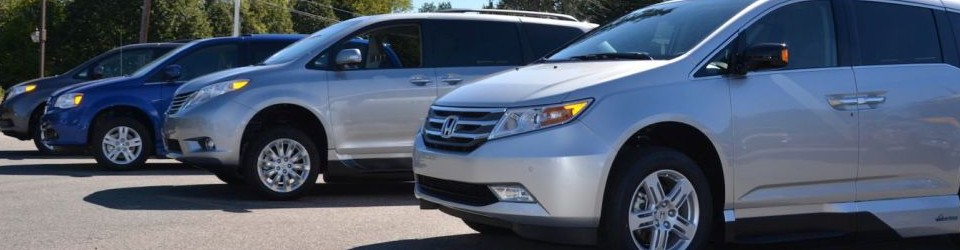
Whether your own wheelchair accessible vehicle is undergoing repairs or modifications or you’re testing the adaptive automobile waters before taking the plunge with the purchase of one, renting a Wheelchair Accessible Van is an affordable, convenient and comfortable way of improving your mobility.

If you’re looking to rent this type of vehicle, these are some good tips to keep in mind.

How Much Does It Cost To Rent A Handicap Van?
If you’re all about saving your pennies, there are many ways to reduce the cost of renting a wheelchair accessible van. Here are just a few:

  • Avoid renting an accessible vehicle airport. Enjoy lower taxes and minimal fees by going to a dealer or rental agency outside the airport grounds.
  • Reserve online whenever possible to take advantage of special offers.
  • Fill up the tank before returning the vehicle. More often than not, this will be less expensive than paying the fill-up fee or pre-paying for gas at the rental agency.
  • Don’t double up on insurance. If your personal auto insurance already covers you for rentals, make sure you don’t sign up for redundant coverage.

Where to Go
Many mobility dealers maintain a fleet of accessible cars or conversion vans for rental purposes. Identify and contact the location nearest you to find out if they have handicap vehicles available to meet your needs. There are also a number of companies that specialize in accessible rental vehicles.

When to Rent
A wheelchair accessible van or car can transform the lives of people with disabilities or temporary mobility impairment. Renting a wheelchair accessible vehicle can be particularly helpful when:

  • Your current wheelchair accessible vehicle requires repairs or maintenance over a period of multiple days.
  • You’re going on a road trip or long ride – a rented wheelchair accessible vehicle can make these much more comfortable. Even if you own a wheelchair accessible vehicle, you might still consider renting a vehicle in order to avoid putting the mileage and wear on your own van.
  • A loved one or family member with a disability visits. If you don’t own an accessible vehicle, renting a wheelchair accessible vehicle can facilitate transporting your friends and family.

The History of the Wheelchair

From its early inception to modern design, the world of wheelchairs and mobility solutions has rolled through a very interesting evolution.

We live in a day and age where technology has forged the reality of power chairs, smart chairs and beyond, but history tells us the first known wheelchair, then known as the invalids chair, has developed into an extremely useful resource for people with disAbilities and has fostered a simultaneous campaign to raise awareness and understanding for its users.

The Early Days
It’s predicted that the very first renditions of the wheelchair rolled out in China, though Phillip II of Spain is largely attributed to its mainstream acceptance. Spanish inventors designed the chair for Phillip II, who was suffering from Gout.

No surprise that royalty got its own renditions.

As for the commonwealth, mobility solutions were largely the responsibility of the families and servants of the loved one with a disAbility or up to the individual with the disAbility, themselves. German watchmaker and paraplegic, Stephan Farfler was one such individual who designed a personal solution in 1665. Farfler engineered a hand cranked tricycle — called the manumotive carriage — which is said to have also inspired modern day bicycles.

Bath Chairs and Beyond
In 1783, Englishmen John Dawson invented another three wheeled rendition which he so creatively named the Bath Chair, after the town of Bath, England. The contraption appeared somewhat reminiscent of old-fashioned bathtubs and could be drawn by animals or pushed by hand.

By the late 1800s however, the clunky Bath Chairs were due for a revisit and patents started surfacing for chairs that utilized two larger wheels in the back and smaller casters in front to achieve maneuverability and better comfort for its users. Rubber wheels and pushrims were also added for self-propulsion and independent use.

Wheelchairs as We Know Them
At the turn of the 20th century, wheelchairs began to take the shape of our common perceptions, largely influenced by their need for wounded soldiers and veterans, ripples of the early modern warfare. During these years of conflict, the world experienced an influx in amputations and battle wounds that sparked a growing need for mobility solutions.

In 1916, British inventors were already designing early power chairs and in 1932, Harry Jennings engineered the world’s first folding wheelchair out of tubular steel.

Following the Second World War, Canadian inventor, George Klein, pioneered the world’s first electric power chair to enable veterans returning from battle.

Nowadays technology has empowered wheelchair conversion vans, electric lifts for people with disAbilities, prototype exoskeletons and beyond. From its humble beginnings to modern marvels, the history of wheelchairs has made a grand impact on the world around us.