Tag Archives: awareness

Adaptive Golf

Whether you want to learn the game or hone your skills, there is a golf program for everyone! Many solutions exist for whatever stops you from enjoying the game of golf, from carts to clubs to accessories and specialty devices.

  • Adaptive golf carts now have swivel and extending seats and armrests to play while seated as well as elevating lifts that allow paraplegics and others with limited leg strength to play from a standing position.
  • Adaptive golf clubs can have special grips for those with missing fingers, deformed hands, osteoarthritis or loss of strength. Some are specialized for seated or standing golfers. Some club shafts are bent for seated individuals.
  • Gloves and grip aids include prosthetic golf grip devices, elastic gripping devices and more.
  • Accessories include tee setters and ball retrieval systems to reduce bending. One device even stabilizes your balance.

Search for a golf program for those with disabilities in your area to get tailored instruction from golf instructors certified to teach. For more information, check out national associations like the National Alliance for Accessible Golf, the Disabled Sports USA, and/or the United States Golf Assoc.

The Adaptive Golf Foundation of America has scrambles, classics, opens, championships and tournaments across the country throughout the year.
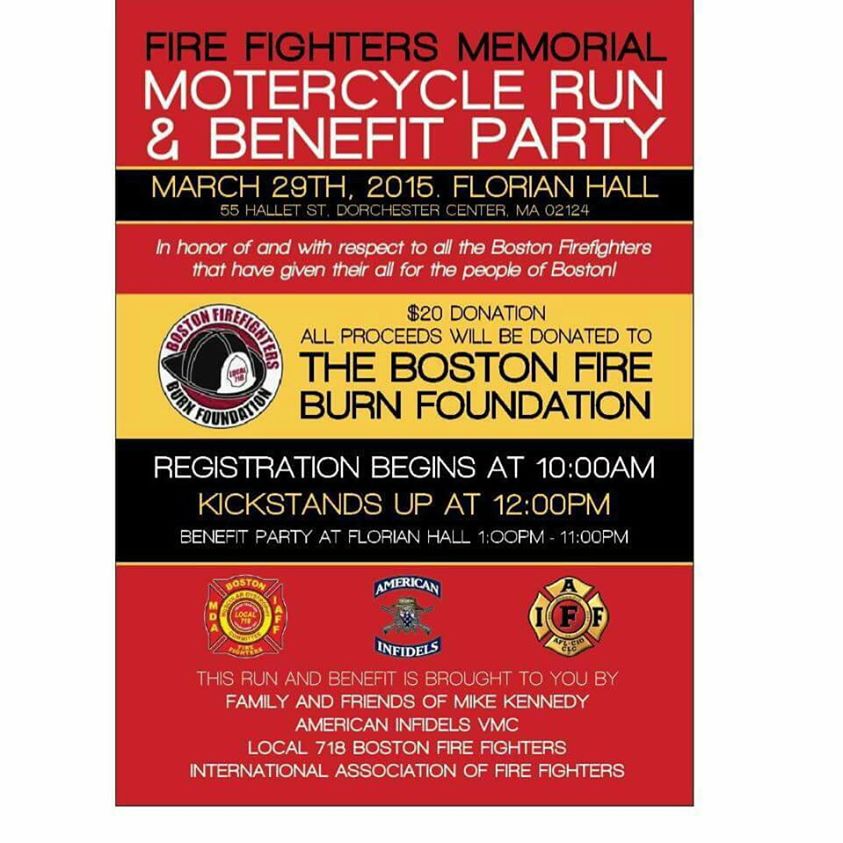

Fire Fighters Memorial Motorcycle Run & Benefit Party

Fire Fighters Memorial Motorcycle Run & Benefit Party

Tips to Help Overcome the Fear of Driving

Practice practice practice:

  • To boost your confidence, drive to the end of the block and back or around an empty parking lot, then gradually go for longer drives.
  • Ask someone to accompany you if that helps you relax.

Patience:

  • Don’t start driving if you’re not calm and collected. Sit in the car and take deep breaths until you attain peace of mind and only then start the car and drive away.
  • Yoga classes may help you become a more focused, calm and less distracted driver.
  • If you get lost or experience panic, pull over until you calm down. Take as much time as you need. If you have a cell phone, call for directions.

Never get lost!

  • A Global Positioning System (GPS) may lessen the fear of getting lost.
  • No GPS? Print out the map directions from the Internet for those places you go frequently and keep them in the glove box.

Therapy:

Simple solutions to physical problems may help the mental and emotional pangs. For example, a spinner knob on the steering wheel allows accurate one-handed steering; hand controls replace feet for acceleration or braking—whatever the problem, there are solutions.

Occupational Therapists and Driver Rehabilitation Specialists can help. You can get a behind-the-wheel evaluation and recommendations for adaptive driving aids to help overcome many physical drawbacks. Whether the problem is muscle weakness, spasms or something else, therapists can address them.

Tuberculosis (TB) Awareness

Tuberculosis (TB) may seem like an obscure disease; perhaps you were once tested for it during a pre-employment or school physical. But for people in some countries, tuberculosis infection is a real threat, the symptoms are well known, and the death toll is still too high. With the emergence of resistant strains of TB, currently used medications are becoming less effective, and for some strains, treatment is extremely difficult.

And TB is more common than you may think. About one-third of the world’s population is currently infected with TB, with one new infection occurring every second. Not all infected people are sick with active TB; in fact, 90 percent have “walled off” the bacteria within their lungs and are not ill. But the other 10 percent will develop active, contagious tuberculosis each year, and each person who develops active TB will likely infect at least 10 to 15 other people before s/he is treated.

Tuberculosis Is All About Human Contact
Eradicating the tuberculosis infection in a particular country isn’t a matter of simply providing a clean water supply or non-contaminated food — it’s about setting up an organized system for recognizing the infection, treating it, and reducing transmission from person to person. Tuberculosis is spread by the tiny droplets that become airborne when a person with active TB coughs.

Preventing Tuberculosis Infection
Limiting transmission sounds simple in principle, but it is an elusive goal for many countries. To stop the spread of tuberculosis, people must be treated as soon as they contract it.

The United States has an extremely low incidence of tuberculosis — around 12,000 to 13,000 new diagnoses per year. That’s because the United States has the human resources, an existing healthcare system, and funds needed for controlling the disease. Many countries have none of these things. And those countries, including many in Asia and Africa, are still plagued with high numbers of tuberculosis cases. Effective medications are needed to control tuberculosis and unfortunately some parts of the world either can’t afford or can’t administer them.

Project 22

Project 22

The cost will be $12.50 for civilians and FREE for Veterans.
VETERANS STILL MUST CLICK ON THE LINK AND RESERVE THEIR TICKETS!

Tickets will go fast and this will be a one night only show so make sure you get yours today! Just go to www.clickitevents.com to purchase yours!

For those riding, there will be a link up at Harley-Davidson of Frederick and then will have an after party at Hardtimes Cafe And Cue.

Saturday, May 2
at 7:00pm
MDL Holiday Cinemas official
100 Baughmans Ln, Frederick, Maryland 21702

For more information on this event please visit the Website or Facebook Page
Click here to view the trailers!
If you can’t make it to the event but still want to support the cause you can Donate Here!

ALL PROCEEDS WILL BENEFIT 22 NEEDS A FACE

The making of Project 22
Project 22 was a 22 day, 6,500 mile motorcycle awareness campaign from San Francisco to New York City to raise awareness of the high rate of suicides within the Veteran community. As we traveled across the country, we spoke with many Veterans who had contemplated or attempted suicide and asked them for their stories; what led them to it and what brought them out of it. The responses regarding the challenges were in remarkable unison although the hope they found came in many different forms. We were able to explore the therapeutic potential behind sailing, pottery, education, activism, family, service dogs, painting and more.

We also spoke with leading researchers of Traumatic Brain Injury and Post Traumatic Stress, mental health clinicians and educators, as well as, leading experts in warrior culture and combat stress. Coupled with the insightful and potentially life changing information we captured in interviews, we filmed the motorcycle awareness campaign, including camping, several organized rides and our final ride being escorted into World Trade Center by the Port Authority Police Department. We gathered incredible footage and news coverage in multiple cities, including Pittsburgh and New York.

Project 22 was entirely crowd-funded via an IndieGoGo campaign and private donations. In addition, the crew was offered food, lodging and assistance wherever we rode, helping keep production costs low. Project 22 is fiscally sponsored by From The Heart Productions, a 501(c)3 non-profit organization, while Medicinal Missions applies for independent non-profit status. All donations are tax-deductible and are made payable to From The Heart Productions via the PayPal link on our website or by check to: From The Heart Productions 1455 Mandalay Beach Road Oxnard, CA 93035-2845

From The Heart has been successfully funding films since inception in 1993 under the 501(c)3 Internal Revenue Code of 1954. Also classified as a public charity under section 509 (a) (2) of the Code. Monetary donations to the Fiscal Sponsorship Program qualify as charitable contributions under the U.S. Tax Code for 95 444 5418.

Current Campaign
Statistically, 22 Veterans of the US Military will take their own lives and 22 families will lose loved ones today due to combat-related stresses and injuries. Project 22 follows two combat-wounded Veterans on a mission to find hope. Riding motorcycles from San Francisco to New York, Daniel and Doc speak with Veterans about post-war challenges that lead to suicide and the healing Veterans are finding in alternative forms of therapy such as sailing, pottery, education, service dogs and more.

During the 6,500 mile journey, our riders interview leading researchers, mental health clinicians and educators who specialize in Traumatic Brain Injury and Post Traumatic Stress, as well as a leading expert in Warrior Culture and Combat Stress. Asking hard hitting questions and opening up about their own struggles, Daniel and Doc will stop at nothing to reach tomorrow’s twenty-two.

Mission Statement
To raise awareness of Veteran suicides and to educate on methods to overcome symptoms of Post Traumatic Stress (PTS) and Traumatic Brain Injury (TBI) in order to prevent Veteran suicides and make alternative therapies available to Veterans with PTS and TBI.