Tag Archives: disabilities

Respect Accessible Spaces

Going out in public is often riddled with obstacles for people with disAbilities. While this is largely due to inaccessible structures like stairs and narrow doors, so many unnecessary barriers are created by able-bodied people who place themselves where they shouldn’t be. That’s not to say that someone with a disAbility has special privileges. Rather, reserved access locations are intended to give people with disAbilities equal opportunities to experience the world around them. Here are some accessible places where able-bodied people should not be:

Handicap Parking Spaces
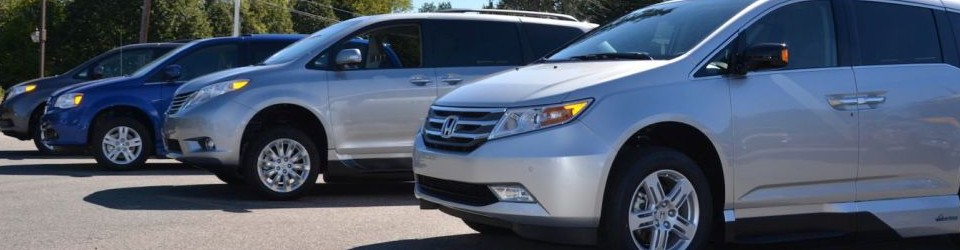
By far, the most frustrating obstacle put in place by able-bodied people is parking illegally in handicap accessible parking spaces. Though often thought that handicap parking is one of the “perks” of having a disAbility, the reality is that it’s a necessity, not a convenience. Most people with a disAbility get around in a wheelchair accessible vehicle that’s adapted with either a foldout/in-floor ramp or a lift so they can easily get in and out of their vehicle. If they don’t have access to a parking spot with enough space, there is literally no (safe) way for them to get out of their vehicles, which directly prevents them from getting where they need to go.

There are countless times when entering many parking lots that you’ll find that the only accessible spots are occupied by someone who doesn’t have a proper license plate or a permit. It is also common that vehicles park illegally in the white/blue lines next to the accessible spots making it impossible for the owner to access their vehicle which leaves them stranded.

Parking illegally in a handicap spot denies an important means of access to all people who legitimately need the accessible spaces. Able-bodied people have an entire parking lot full of spaces to choose from; disabled people usually only have a few accessible spaces. The accessible spaces are not there for the convenience of people who are lazy, or for people who claim they just needed to run into the store for a second. Illegal use of any part of a accessible parking space is inexcusable in any situation.

Accessible restroom stalls
While using the restroom at multiple locations you will find that most stalls are empty except the accessible one. Able-bodied people see the big, roomy bathroom open and are drawn to it; it’s understandable not wanting to be cramped into a small stall. However, using accessible bathroom facilities, especially when others are available, does demonstrate that people with disabilities aren’t in society’s conscience as being just as likely to be out in public as non-disabled people.

If every other stall is taken, it’s obviously okay to use it. But since people with disAbilities cannot physically get into regular sized restroom stalls, it’s not asking too much for able-bodied people to leave the one accessible bathroom option open when there are five other empty ones that are readily available.

Accessible shower stalls
Much like accessible bathroom stalls, there’s usually only one accessible shower facility in places like shared college dormitory restrooms and gym locker rooms. The accessible stalls are roomier and they often have a fold-down seat attached to the wall. Although this may be tempting for non-disabled people who want a shower with room to dance around or have a place to rest tired feet the accessible facilities are not intended for the convenience of able-bodied people.

Apparently, this is a hard concept for people. Frequently you’ll discover that every shower stall is empty except for the accessible one.  Unfortunately it seems that able-bodied people see accessible showers as a luxury, rather than realizing that they are a necessity for disAbled people.

Accessible dressing rooms
Most stores have a large dressing room that qualifies as “accessible.” Unfortunately, they are rarely, if ever, properly labeled or guarded by store employees. Hence, some of the worst offenders of able-bodied people who block public access are the ones who use accessible dressing rooms.

Some people who actually need the accessible stall have to wait for 15-20 minutes (give/take) while able-bodied people take their time in the only accessible dressing room, even though several other regular dressing rooms are available. Able-bodied people need to realize that they have fifteen dressing rooms to choose from while people with disAbilities, that actually need an accessible room, only have one option.

Respect Accessible Spaces
If you don’t have a disAbility, then next time you just have to grab a gallon of milk or try on a bunch of shirts, please reconsider and don’t take up the only reserved accessible places. Leaving accessible places open for the people who truly need them is a super simple way to promote inclusion and acceptance of the disAbled community.
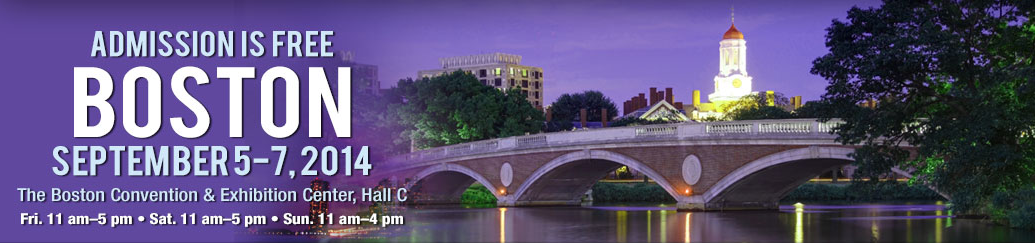
Boston Abilities Expo 2014

Boston Abilities Expo 2014

Abilities Expo is a CELEBRATION of what you CAN DO

Imagine everything you need, all under one roof! For more than 30 years, Abilities Expo has been the go-to source for the Community of people with disabilities, their families, seniors, veterans and healthcare professionals. Every event opens your eyes to new technologies, new possibilities, new solutions and new opportunities to change your life. Where else can you discover ability-enhancing products and services, play a few adaptive sports, learn new dance moves, attend informative workshops and only scratch the surface of what Abilities Expo has to offer? Register for free today.

Adaptive Sports for People With Disabilities

People with disabilities are capable of anything they set their minds to — and sports are no exception.

Adaptive sports, otherwise known as para-sports or sports for people with disabilities, are just that. These sports promote mobility, community and excitement while offering physical benefits for people with disabilities.

Adaptive sports span a broad spectrum, from mild modifications on traditional games to the invention of brand new sports as a whole. Whether you’re a seasoned athlete or just looking to jump into the action for the first time, there’s sure to be a sport for you.

Traditional Adaptive Sports
Many adaptive sports are a nod of the cap to mainstream sports, such as basketball, soccer, baseball, tennis and hockey. Not surprisingly, there are youth and adult leagues for both individual options (like fishing, bowling and Bocce) and team activities.

General formats typically remain the same and may serve as a great entry point for newcomers to pull from their familiarity of the sport and its strategy. Joining a team is also a great way to make new friends, establish workout partners, find a carpool buddy and build community. Not to mention, sports are a great excuse to burn calories, and maybe even get some fresh air.

Interestingly enough, adaptive sports and their athletes have inspired brilliant technology for participants with disabilities. Whether you are paraplegic, blind or have some other disability, if you use a wheelchair, wear a brace, drive a mobility vehicle or have other equipment to accommodate your needs, para-sports have options for you. Adaptive technology is available for a wide range of sports and includes a variety of equipment, such as:

  • Ringing soccer balls
  • Forearm fishing supports
  • Retractable-handle bowling balls

The goal of this type of equipment is to provide you more independence and freedom so you can focus on the fun.

Adventurous Outdoor Para-Sports
If traditional is a bit too tame for your liking, many adventurous outdoor sports are also out there.

From horseback riding and biskiing, kayaking and even downhill biking, adaptive sports are conquering the court, the slopes and everything in between. Not unlike their traditional counterparts, adventure sports are a great way to reclaim range of motion, build muscle, clear the head and get a healthy kick of adrenaline from time to time.

Some athletes, like Aaron “Wheelz” Fotheringham (born with Spina Bifida), have even broken into the extreme sports venue, proving sometimes a wheelchair ramp can be inspiration for larger ramps.

Where to Start
It’s easy to start a new sport or join a team. As long as you keep a few of the fundamentals in mind, you’ll be having a blast in no time.

Here are some basics to help you dive in:

  • Search your community for leagues and events
  • Join a team and/or find a mentor (someone who can show you the ropes)
  • Upgrade your equipment if you’re really serious
  • Practice makes perfect

Remember that everyone had to start somewhere and athletic skill is often the accumulation of effort. What’s most important is a willingness to learn and a desire to have fun.

And chances are, there is a team somewhere looking for a person just like you!

How to Respectfully Communicate with People with Disabilities

The first steps of empowering and respectfully communicating with people with disabilities are making an effort and fine tuning awareness. There’s no absolute formula for compassion, but putting forth the effort — any effort, really — goes miles.

Recognize there are trigger words that often carry a deep connotation of disrespect and disregard for a magnitude of communities. Titles like “cripple,” “retard,” “slow” and “vegetable” carry vulgar consequence, but conversations surrounding people who have disabilities deserve a deeper level of understanding than simply avoiding a handful of hurtful words.

These people are humans, not disabilities.

Build, Don’t Box

Common tongue often highlights a person’s disabilities like the elephant in the room. A more active approach is to acknowledge and applaud one’s abilities. Focus on the person, not the disability. And, just like any of us, we each have our challenges but we don’t go around telling people we “suffer from” one thing or the other. This language would steal any sort of confidence that we might overcome our daily hurdles.

You wouldn’t say, “Joe’s a crippled, paraplegic banker with a handicap van.”

This approach confines Joe and his potential, boxing him into a stigma of predetermined deficiency.

“Joe is a banker with paraplegia who drives a mobility vehicle,” builds Joe as a capable human. Seeing Joe first and foremost as a person instead of a condition shows respect for his ample abilities.

Furthermore, it’s crucial to recognize individuals. Joe is Joe. Joe is not one of “the handicapped,” “the paraplegics” or any other all-inclusive term. Joe is one, able individual who has paraplegia. The condition does not define Joe, and though Joe may be proud and affiliated with communities who engage paraplegia, it’s best to allow Joe the opportunity to define those relations.

Never Stop Learning

Simply put: Don’t be afraid to ask. If you’re concerned you don’t know how to interact with people with disabilities, voicing your innocent naivety may be the wisest approach. Instead of shying away from the conversation and further alienating that person, seek out a respectful opportunity to ask about his or her story.

Take a stand to empower people with disabilities through your awareness, speech and understanding.

Teens with Disabilities: Learning to Drive A Handicap Accessible Vehicle

The majority of teenage kids will assert that learning to drive not only makes for an exciting experience but also marks a very important moment in life – moving a step closer towards achieving independence. Teens living with a disability are not exempt from this feeling. When it’s time to teach your child to drive, there are a few important things to keep in mind to ensure your child’s safety and the safety of others on the road.

Regardless of your age, preparedness is essential when it comes to driving. For those living with disabilities, the process of how you prepare can be slightly different, but it is certainly equally as important. Teens and new drivers with disabilities must complete a drivers’ assessment prior to beginning lessons in order to determine what sort of adaptive equipment or techniques he or she must use while driving. Steering aids, hand controls, or ramps/lifts may be necessary for your teen to be ready to get behind the wheel and recommendations will be made by the assessment administrator (most often by a certified driver rehabilitation specialist) after a proper exam.

While some teens will require little additional equipment in order to operate a vehicle, others may need more thorough vehicle conversions. If purchasing a new handicap accessible vehicle is not in your budget, there are used options available to suit your child’s needs, as well as rentals and loaners made available by some driving schools.

Qualified driving specialists will be able to relay information on your state’s driving laws for people with disabilities, how to operate the vehicle, as well as how to get in and out of the car without additional assistance, should they need to do so.

Throughout this journey towards adulthood, it’s vital that you remain your teen’s number one fan. A supporting and encouraging environment can dramatically improve your child’s outlook on taking on the road, raising their self-confidence and making them an overall better driver. Remember, learning how to drive takes time, but with your support, the expertise of driving coaches and the accessibility of a modified vehicle, your teen will be on his or her way to being a licensed driver!