Tag Archives: awareness

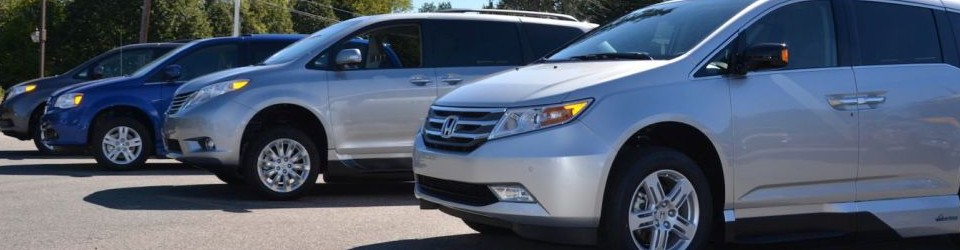
When is Renting a Wheelchair Van Right for You?

To Fill a Gap During Repairs
When you need to make repairs to your wheelchair accessible vehicle or wheelchair van it is more difficult for you than the average car owner. What do you do when you don’t have the vehicle? Most of us don’t have a second wheelchair van we can use. When the repair is unexpected or more serious than anticipated, how do you manage? Do you cancel and reschedule all your doctors’ visits and planned activities for you and the people you care for? No! Simply make arrangements for a rental van so you can get yours repaired and still go on with your life.

To Accommodate a Visitor Using a Wheelchair
Are you or a wheelchair user you know flying into our area and need to have access to a wheelchair van rental? Would you like to have a grandmother or grandfather or other wheelchair-using relative come and spend some time with you and your family? A wheelchair van rental can give the freedom to come and stay without unnecessary barriers to family fun and mobility.

To Bring a Loved One Out From a Care Facility
For those in a nursing facility for an extended time-whether that is for a week, month or years-and those of us that care for them-visits and outings are critical for keeping spirits up and connections alive. A wheelchair van rental can make these outings better for everyone.

Wheelchair vans are much easier to use and enable most of us to handle getting someone in and out of the vehicle easily and without risk of injury or inconvenience.

Ease of use makes us all more likely to set aside the time and know that we can have a successful outing without the struggle of getting into and out of vehicles that are not wheelchair accessible

To Try a Wheelchair Van Before You Buy One
Buying a wheelchair van is a big decision and requires considerable care in making sure that the vehicle you choose will work for your particular situation. While all wheelchair vans have similarities, the differences are significant. The differences in height, width and shape may not seem like much to some. However, when you are in a wheelchair and have special equipment or physical limitations to accommodate, a couple of inches on one side or the other can be the key to complete happiness with your wheelchair van.

Maybe you think a wheelchair van would help your life but you have not been able to justify the expense. Sometimes trying it out can help you to feel that you are making the right decision. Maybe you will find that a wheelchair van is not right for you because of the fit, your family size or the conditions you drive in. Regardless, renting a wheelchair van can help you to assess that far better than a simple test drive.

When Your Disability is Only Temporary
Access to a wheelchair van can be a lifesaver when you are recovering from an injury or medical procedure that forces you to use a wheelchair for a limited period of time. Whether you have had surgery, or have suffered a broken bone or other injury, even an illness that limits your mobility, having to be in a wheelchair is not easy. Wheelchair van rentals can ensure that this temporary problem does not keep you restricted in your ability to make the most of the situation.

Having a wheelchair van rental accessible during your recovery means that the van is there when you need it. When you want to go for a ride, visit a friend or run to the store…

Using public transportation or medical transportations services limits your convenience and easy access to mobility

When you have recovered and no longer need the vehicle, simply return it to us and go on with your recovery and normal life.

For Doctor’s Visits and Medical Transportation
For the occasional doctor’s visit, using a transportation service may be a reasonable choice. However, when you are going through periods of multiple visits, testing, etc over several days or weeks or have a condition that requires regular, frequent appointments, the convenience of a wheelchair accessible van rental cannot be beat. Financially it will also work out to be less expensive in many situations.

When medical visits have got you running ragged, take some of the load off with a wheelchair van rental scheduled around your needs with the built in flexibility that comes with having it dedicated to you.

Do you want to take a detour on the way home from the doctor? Go out to lunch or do a little shopping? This is the kind of convenience that wheelchair accessible van rentals can provide.

For Special Occasions and Outings
Don’t let access to convenient wheelchair van transportation keep you from bringing your wheelchair-using loved ones to special events like weddings, birthdays, retirements and other “can’t miss” occasions. Wheelchair accessible van rentals enable you or that special person to attend significant occasions in the most convenient, comfortable and affordable manner possible.

For Road Trips and Vacations
Many people take rental wheelchair vans on long trips and vacations. Often, the wheelchair van or handicapped van they have is not large enough or dependable enough for their needs. Even with the excess mileage charges, the overall rental cost can fit into the vacation budget.

Huntington’s Disease Awareness

What is Huntington’s Disease?
Huntington’s disease (HD) is an inherited brain disorder that results in the progressive loss of both mental faculties and physical control. Symptoms usually appear between the ages of 30 to 50, and worsen over a 10 to 25 year period. Ultimately, the weakened individual succumbs to pneumonia, heart failure or other complication.

Everyone has the HD gene but it is those individuals that inherit the expansion of the gene who will develop HD and perhaps pass it onto each of their children.

Presently, there is no cure. Although medications can relieve some symptoms, research has yet to find a means of slowing the deadly progression of HD.

Current estimates are that 1 in every 10,000 Americans has HD and more than 250,000 others are at-risk of having inherited it from a parent. Once thought a rare disease, HD is now considered one of the more common hereditary diseases.

Every person who inherits the expanded HD gene will eventually develop the disease.
Over time, HD affects the individual’s ability to reason, walk and speak

Symptoms Include:

  • Personality changes, mood swings and depression
  • Forgetfulness and impaired judgment
  • Unsteady gait and involuntary movements
  • Slurred speech and difficulty in swallowing

The Scope of HD
Approximately 30,000 Americans have HD, but the devastating effects of the disease touch many more. Within a family, multiple generations may have inherited the disease. Those at-risk may experience tremendous stress from the uncertainty and sense of responsibility. In the community, lack of knowledge about HD may keep friends and neighbors from offering social and emotional support to the family, fostering unnecessary isolation. The Huntington’s Disease

Society of America (HDSA) has a nationwide network that provides support and referrals for individuals with HD and their families.

Genetic Testing for HD
Individuals can be tested for the gene that causes HD. The test may be used to confirm a diagnosis of HD, but may also be used as a predictive test before symptoms arise. Some individuals at-risk for HD feel that it is important to know whether they carry the gene. Others ultimately choose not to be tested. While the actual procedure is simple, the decision to have the test is not. HDSA recommends that persons wishing to undergo presymptomatic testing for HD do so at one of our HDSA Centers of Excellence, or at a testing center with specific training in working with HD. A list of these testing centers is available from HDSA

HD affects both sexes and all races and ethnic groups around the world.
The Decision to test is highly personal and should never be rushed or forced.

Who is At-Risk?
Every child of a parent with HD has a  50/50 chance of inheriting the expanded gene that causes the disease. If the child has not inherited this expanded gene, he or she will never develop the disease and cannot pass it on to their children.

Genetic Information Nondiscrimination Act of 2008 (GINA)
The Genetic Information Nondiscrimination Act (GINA) protects people from discrimination by health insurers and employers on the basis of their DNA information. This federal law also enables individuals to take part in research studies without fear that their DNA information might be used against them by health insurers or in the workplace.

However, GINA protections do not extend to long term care, disability or life insurance policies. Anyone contemplating testing should first consider adding one or more of these types of policies before starting the testing process.

Advocacy
HDSA advocacy works to advance legislation and policy to improve the lives of HD families by raising awareness about HD in the U.S. Congress, by promoting legislation, policy and regulations that would help individuals in the HD community, by educating Federal agencies about HD, and by partnering and collaborating with national organizations that have common goals. Learn more at www.hdsa.org/advocacy.

Join us in the fight against HD
YOU can help HDSA in our efforts to end HD and provide resources for those who must face this disease daily. Both funds and volunteers are needed. Contact the HDSA National Office to find out how YOU can help.

HD does not skip generations; if one does not inherit the expanded gene, one cannot pass it on

An End To HD?
In 1993, researchers identified the gene that causes HD. Since then, research has moved quickly towards developing treatments and, ultimately, a cure. HDSA supports the goals of clinical and basic research at leading research facilities globally.

Clinical and observational trials are an important way you can help to sustain the momentum of HD research and move potential new therapies through the approval process. Visit the Research section of the HDSA website for more information and to find a trial in your area. There are opportunities for all HD family members – gene positive, at-risk, gene negative, and caregivers – to participate.

About HDSA
The Huntington’s Disease Society of America (HDSA) is the largest 501(C)(3) non-profit volunteer organization dedicated to improving the lives of everyone affected by Huntington’s disease. Founded in 1968 by Marjorie Guthrie, wife of folk legend Woody Guthrie who lost his battle with HD, the Society works tirelessly to provide family services, education, advocacy and research to provide help for today, hope for tomorrow to the more than 30,000 people diagnosed with HD and the 250,000 at-risk in the United States.

Where to find help
You are not alone in facing HD. HDSA has developed a nationwide network that includes Chapters and Affiliates, HDSA Centers of Excellence, Support Groups, and Social Workers that are ready to assist you with referrals and resources in your area. To learn more, please visit www.hdsa.org or call 888-HDSA-506.

Research worldwide is working to unlock the mystery of HD and find a cure

Project 22 – Promoted by Team RWB Boston

Project 22

Tuesday, July 28 7:30PM – 9:12PM
$14.00 General
at Landmark Kendall Square Cinema
Bldg. 1900 One Kendall Square, Cambridge, MA, US, 02139

For more information on this event please visit the Website

Click here to view the trailers!

The making of Project 22
Project 22 was a 22 day, 6,500 mile motorcycle awareness campaign from San Francisco to New York City to raise awareness of the high rate of suicides within the Veteran community. As we traveled across the country, we spoke with many Veterans who had contemplated or attempted suicide and asked them for their stories; what led them to it and what brought them out of it. The responses regarding the challenges were in remarkable unison although the hope they found came in many different forms. We were able to explore the therapeutic potential behind sailing, pottery, education, activism, family, service dogs, painting and more.

We also spoke with leading researchers of Traumatic Brain Injury and Post Traumatic Stress, mental health clinicians and educators, as well as, leading experts in warrior culture and combat stress. Coupled with the insightful and potentially life changing information we captured in interviews, we filmed the motorcycle awareness campaign, including camping, several organized rides and our final ride being escorted into World Trade Center by the Port Authority Police Department. We gathered incredible footage and news coverage in multiple cities, including Pittsburgh and New York.

Project 22 was entirely crowd-funded via an IndieGoGo campaign and private donations. In addition, the crew was offered food, lodging and assistance wherever we rode, helping keep production costs low. Project 22 is fiscally sponsored by From The Heart Productions, a 501(c)3 non-profit organization, while Medicinal Missions applies for independent non-profit status. All donations are tax-deductible and are made payable to From The Heart Productions via the PayPal link on our website or by check to: From The Heart Productions 1455 Mandalay Beach Road Oxnard, CA 93035-2845

From The Heart has been successfully funding films since inception in 1993 under the 501(c)3 Internal Revenue Code of 1954. Also classified as a public charity under section 509 (a) (2) of the Code. Monetary donations to the Fiscal Sponsorship Program qualify as charitable contributions under the U.S. Tax Code for 95 444 5418.

Government Grants for People with Disabilities

Find government grants and financing for handicap vehicles for people with disabilities nationwide. Money can be located with a little patience and a lot of research through various government programs. We’ve compiled a list of the most well-known government grant programs to assist your search for help funding a wheelchair van.When paying for a handicap van, you can use money from government grant programs for people with disabilities, as well other funding resources like disability grants, loans, fundraiser money, foundation endorsements, or any other funding source. We’ll work with your chosen foundations or any government grant program, after they verify financial assistance, to get you on the road!

To learn more about applying for wheelchair van grant funding to buy a handicap van or convert a pre-owned minivan, read “How to Apply for a Grant for Wheelchair Vans, Mobility Equipment, or Minivan Conversions.”

Government Wheelchair Van Financing Resources
Fund your wheelchair van with these government grant programs provided by the U.S. government and locally in your state.

Administration for Children & Families
On this website, new funding opportunities are displayed as they become available.

Grants.gov
The U.S. government resource listing federal grants available.

Medicaid
Sometimes provides assistance when children or other special circumstances are involved.

Medicaid/Department of Human Services (DHS)
Children are screened as part of the Early and Periodic Screening, Diagnosis, and Treatment (EPSDT) program of Medicaid. Under Medicaid’s “rehabilitative services,” people often receive handicap van or lift funding to achieve their “best possible functional levels.”

Vocational Rehabilitation (VR)
Located within each state’s Department of Human Services (per state), helps you prepare for work, train for a job, find a job, or keep a job as early as high school. Services are prioritized according to the severity of the disability.

Department of Assistive and Rehabilitative Services (DARS)
Check your state’s branch for grant availability.

Division of Developmental Services (DDS)
Check your state’s branch for grants.Those with Supplemental Security Income (SSI) benefits from the Social Security Administration can contact the agency about its Plan to Achieve Self Support(PASS). A PASS plan sets aside income to buy equipment or services in a way that keeps income, as well as resources, below the SSI eligibility cut-off so there are no reductions in benefits. The emphasis is on whether the handicap van or equipment will help the SSI recipient become vocationally self-sufficient. It’s important for an individual to contact and receive the approval of Social Security before setting up a PASS plan. Once money has been set aside for a PASS, spending it on something else can result in the loss of SSI benefits.Please note: You can use multiple sources of funding that include grants, loans, and other funding assistance. If you’re unable to find government grants for people with disabilities or need to acquire more money to help pay for your wheelchair van and/or mobility needs, check out more opportunities at our mobility finance page.

Asperger Syndrome

About AS:

  • It is a neurological disorder that affects the way information is processed in the brain.
  • AS is a hidden disability. Many people appear very competent, but they have difficulties in the areas of communication and social interaction.
  • AS has a genetic and hereditary component and may have additional or interactive environmental causes as yet unknown.
  • AS is a developmental disability. All individuals have social/emotional delays, but continued growth seems to be life-long.
  • The incidence of AS is thought to be 1 in 250. As many as 50% of people with AS may be undiagnosed.
  • There are currently four males diagnosed with AS for every one female, but the true ratio may be as high as one female for every two males.

AS affects each person differently, although there is a core set of features that most people with AS have, to different extents:

  • People with AS have normal to very high intelligence and have good verbal skills.
  • Challenges with the use and understanding of language in a social context.
  • Trouble understanding what someone else is thinking and feeling (called theory of mind or perspective taking).
  • Needing to be taught social behavior that is “picked up on” intuitively by others.
  • Difficulty understanding non-verbal cues such as hand movements, facial expressions, and tone of voice.
  • Challenges with organization, initiation, prioritizing, all called executive functioning tasks.
  • Focusing on small details rather than the bigger picture
  • Most people with AS have intense interest areas such as movies, geography, history, math, physics, cars, horses, dogs or reptiles. These interest areas change every 3 months to several years
  • Friendships are usually formed through mutual interest areas or activities.
  • Most people with AS view the world in black and white with difficulty compromising or seeing the gray areas.
  • Most individuals with AS describe themselves as feeling different, like aliens in our world.
  • Anxiety and/or depression are major components for many people with AS and may affect their ability to function.
  • Some individuals with AS have extreme and debilitating hyper- or hypo-sensitivity to light, noise, touch, taste, or smell. The environment can have a profound impact on their ability to function.