
Tag Archives: awareness

Multiple Sclerosis

Multiple Sclerosis
Multiple Sclerosis can affect individuals in varying ways including tingling, numbness, slurred speech, blurred or double vision, muscle weakness, poor coordination, unusual fatigue, muscle cramps, bowel and bladder problems and paralysis. Due to these symptoms, special equipment or accommodations may need to be made to aid a person in safely maintaining their mobility independence for as long as possible.

Physical Considerations: The following are considerations for selecting a vehicle:

Driving a sedan: The Individual must be able to do the following:

  • Open and close the Door
  • Transfer in and out of the vehicle
  • A wheelchair/scooter must be able to be stored and retrieved. Special equipment is available to aid with storage.

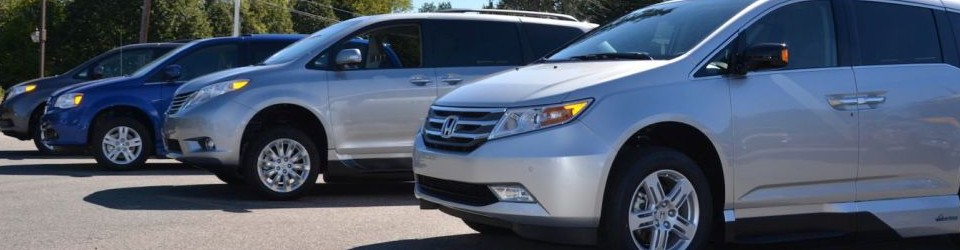
Driving a Van: Options may include a mini-van with a lowered floor and a ramp or a full size van with a lift. Specialized modifications allow a person to transfer to the driver’s seat or drive from a wheelchair. Technology may be able to compensate for the loss of strength or range of motion such as:

  • Reduced effort steering and/or brake systems to compensate for reduced strength.
  • Mechanical hand controls allow for operation of the gas and brake using upper extremities.
  • Servo brake/ accelerator systems compensate for reduced strength/range of motion of arms.
  • If spasticity is difficult to manage, it may lead to an inability to drive.

Visual Changes:

  • May be severe enough that driving is precluded or night driving is prohibited.
  • If double vision is intermittent and can be monitored independently, then driving may be limited to avoid driving during an exacerbation.
  • Sunglasses may help with glare sensitivity.
  • Compensate for loss of peripheral vision with special mirrors and head turning.
  • Learn order of traffic signals to aid with color vision impairment.

Cognitive Issues:

  • Need to regulate emotions and avoid driving when upset, angry or overly emotional.
  • May be limited to familiar routes if some loss of memory or problem solving but still enough judgment to drive.

Decreased Energy:

  • Energy conservation is vital.
  • May require assistance with wheelchair loading to save energy for driving.
  • Air conditioning aids with managing warm climates.

Medications:

  • Seek the physician’s input regarding side effects which may impair driving.
  • Monitor when medications are taken. Don’t drive when sleepy or just before or after medicating

If you or those that drive with you notice any of the above warning signs and need a driving evaluation, give us a call at 508-697-6006 and we can, help you with with knowledge about medical conditions, and help with a comprehensive evaluation and determine your ability to drive.

  • Visual Perception
  • Functional Ability
  • Reaction Time
  • Behind-the-wheel evaluation


Spina Bifida

Spina Bifida
Spina Bifida is a congenital defect in which part of one or more vertebrae (the bone structure that surrounds the spinal column), fail, to develop completely, leaving part of the spinal cord exposed. It can occur anywhere on the spine but is most common in the lower back. The severity of the condition depends on how much nerve tissue is exposed. Frequently special adaptations on a vehicle are necessary for independent driving. The person with Spina Bifida may also have impairments in the ~areas of vision, perception (how the brain interprets what the eyes see) or learning. Adaptive driving equipment is frequently used for physical problems. A spinner knob and hand controls can be used if a person is unable to use either foot for gas or brake. Specialized modifications can also allow a person to transfer to the driver’s seat or drive from the wheelchair in a van or minivan.

Common factors that can affect safe driving:

  • Limited range of motion and strength
  • Difficulty with coordinated movements
  • Visual impairments (poor acuity)
  • Trouble visually scanning or tracking quickly
  • Learning difficulties
  • Impaired judgment in complex situations
  • Slow processing and reaction time

A driver rehabilitation evaluation will examine the strengths and weaknesses of each individual as related to the driving task. The goal is independent, safe driving. No modifications or vehicle selection should be made until the person has completed a driver evaluation.

If you or those that drive with you notice any of the above warning signs and need a driving evaluation, give us a call at 508-697-6006 and we can, help you with with knowledge about medical conditions, and help with a comprehensive evaluation and determine your ability to drive.

  • Visual Perception
  • Functional Ability
  • Reaction Time
  • Behind-the-wheel evaluation

Developmental Disabilities Awareness Month

March is national Developmental Disabilities Awareness Month
National Developmental Disabilities Awareness Month is a chance to spread awareness, advocacy and inclusion throughout the community.  All throughout March we celebrate individuals with Developmental Disabilities and make people aware of their abilities and accomplishments.

It’s not about celebrating disabilities; it’s about celebrating abilities.

…………………………………..

In 1987 President Ronald Reagan proclaimed March “Developmental Disabilities Awareness Month.” The movement of the seventies and early eighties had laid the foundation for significant social change, and the presidential proclamation called upon Americans to provide the “encouragement and opportunities” necessary for people with developmental disabilities to reach their potential.

National Developmental Disabilities Awareness Month

March is recognized as National Developmental Disabilities Awareness Month. If you or a friend, co-worker, loved one or client has a developmental disability, this month is for you!

Thanks to the advocacy efforts of The Arc in the 1980’s, February 26, 1987 President Ronald Reagan officially declared Proclamation 5613 making March National Developmental Disabilities Awareness Month.

The proclamation called for people to provide understanding, encouragement and opportunities to help persons with developmental disabilities to lead productive and fulfilling lives. March is recognized by groups across the country as a time to speak up about the challenges facing people with intellectual and developmental disabilities (I/DD) and their families.

Most people have disabilities of one kind or another. The differences lie mostly in degree and whether our disabilities are seen or unseen. We can help remind others of this important celebration during Developmental Disabilities Awareness Month by sharing these important facts:

Spread the word to your friends and family!

  • Developmental disability is a natural part of the human experience and affects about 4.6 million Americans.
  • All people with developmental disabilities can be productive, contributing members of their communities!
  • Many people with developmental disabilities rely on publicly funded services and supports in order to fully participate in community life.
  • During times of economic decline, essential services and supports for people with developmental disabilities are often threatened.
  • The power of people with disabilities is strongest when their voices are united with each other and their friends, families and other allies.
  • Policy makers can only make good public policy when they hear from the people directly affected by their decisions!

What can you do to advocate for individuals with special needs?

  • Spread the word about Development Disabilities Awareness Month through email, blog, and website updates.
  • Contact local, state, and federal legislators to “Don’t Cut Our Lifeline” – The Arc.
  • Get involved to protect Medicaid services for people with special needs.
  • Learn about essential services for your loved one with special needs.

Everyone wants, and deserves, to enjoy life, feel productive and secure. But in March, we take extra steps to raise awareness about the needs and rights of the people with disabilities and to celebrate their contributions to our communities and society as a whole!

President Reagan’s personal invitation
I invite all individuals, agencies, and organizations concerned with the problem of developmental disabilities to observe this month with appropriate observances and activities directed toward increasing public awareness of the needs and the potential of Americans with developmental disabilities.

I urge all Americans to join me in according to our fellow citizens with such disabilities both encouragement and the opportunities they need to lead productive lives and to achieve their full potential.”

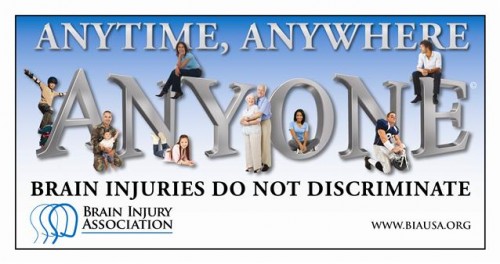
Brain Injury Awareness

Brain Injury Awareness Month - March 2014
Causes of Acquired Brain Injury

Causes of acquired brain injury can include, but are not limited to:

  • Stroke
  • Brain tumor
  • Encephalitis
  • Brain hemorrhage
  • Traumatic brain injury

Causes of Traumatic Brain Injury

The leading causes of brain injury are:

  • Falls
  • Motor vehicle accidents
  • Being struck or striking a hard object
  • Assaults
  • Blasts (a leading cause of traumatic brain injury for active duty military personnel in war zones)

What types of TBI are there?
Any injury to the head may cause traumatic brain injury (TBI). There are two major types of TBI:

Penetrating Injuries: In these injuries, a foreign object (e.g., a bullet) enters the brain and causes damage to specific brain parts. This focal, or localized, damage occurs along the route the object has traveled in the brain. Symptoms vary depending on the part of the brain that is damaged.

Closed Head Injuries: Closed head injuries result from a blow to the head as occurs, for example, in a car accident when the head strikes the windshield or dashboard. These injuries cause two types of brain damage:

Primary brain damage, which is damage that is complete at the time of impact, may include:

  • skull fracture: breaking of the bony skull
  • contusions/bruises: often occur right under the location of impact or at points where the force of the blow has driven the brain against the bony ridges inside the skull
  • hematomas/blood clots: occur between the skull and the brain or inside the brain itself
  • lacerations: tearing of the frontal (front) and temporal (on the side) lobes or blood vessels of the brain (the force of the blow causes the brain to rotate across the hard ridges of the skull, causing the tears)
  • nerve damage (diffuse axonal injury): arises from a cutting, or shearing, force from the blow that damages nerve cells in the brain’s connecting nerve fibers